
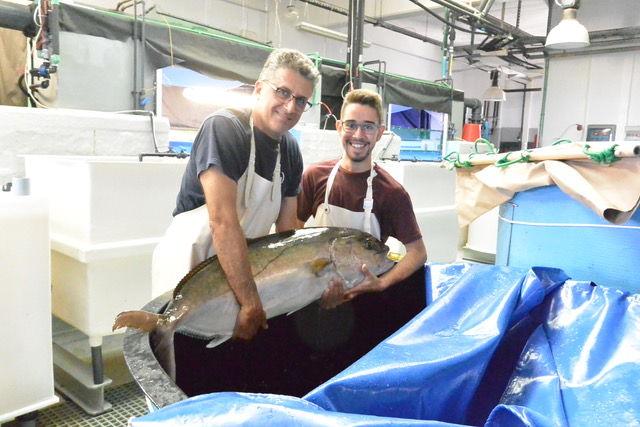
Constantinos Mylonas & Christos Siapazis
My name is Christos Siapazis and I am 20 years old. Since a young age I was passionate about the marine environment. Two years ago, I had the chance to start my studies in this field. Currently, I’m working on my Bachelors degree in ichthyology, at the University of Thessaly, Greece. My degree offers me a great variety of subjects including fisheries, aquaculture, aquatic food production, aquatic plant production etc. Since I started my studies, I realized that aquaculture attracted my interest for multiple reasons. In 2018 I had the chance to study abroad with the Erasmus programme for studies. I took the chance and I completed a semester at the University of Bergen in Norway.
Since the completion of my Erasmus mobility I became even more interested in fish physiology in relation to aquaculture, especially the field of reproductive physiology. My target is to broaded my horizons in this subject area. This target lead me to join the European Aquaculture Society’s student group in February 2019, where I learned about the “Adopt a student” programme.
The idea of having a mentor in the area of my interests intrigued me, resulting in applying. My motives to participate in the program are to gain knowledge and experience in a specific area of expertise. In addition, making connections with professionals and people related to my studies around the world could improvement my communicational skills connected to aquaculture topics, as well as provide counselling for my future study and career plans.
In April this year, I had the first communication with my mentor, Dr. Constantinos Mylonas, who is an EAS Board Member for the period of 2018 - 2020. On our first call we discussed my current level of studies, my interests as well as my future plans, my targets and my wishes related to my studies. Following the “Adopt a student-guidelines” we talked about our motivation linked to this program and we tried to plan a way of cooperation that would be more convenient for both, giving the best result.
The period I choose to become part of the “Adopt a Student” program was suitable for my studies as well. As a part of my curriculum, I had to complete an internship in a public sector facility related to my studies. After conversing with Dr. Mylonas we agreed that this would be the ideal occasion for cooperation and for moving the mentorship program one step ahead. Therefore, between June and August I carried out an internship in the Hellenic Center for Marine Research (HCMR), were Dr. Mylonas is a researcher. During this internship, I had the chance to learn more about broodstock management and fish reproduction, which is one of my scientific interests. In addition, I had the opportunity to work with my mentor and his team of technicians and graduate students, which provided me with extra knowledge on lab and team work, solving questions and teaching me new techniques.
As a mentee I expect to get the maximum benefit from this program not only in an academic way but also in a professional way. For me this program is an open door for networking with people related to my interests and for exchanging ideas. Moreover, it is the greatest opportunity to have someone for guidance on my academic work.
Now that my internship at the HCMR is over, I am planning to stay in contact with my mentor, exchanging ideas and obtaining advice.
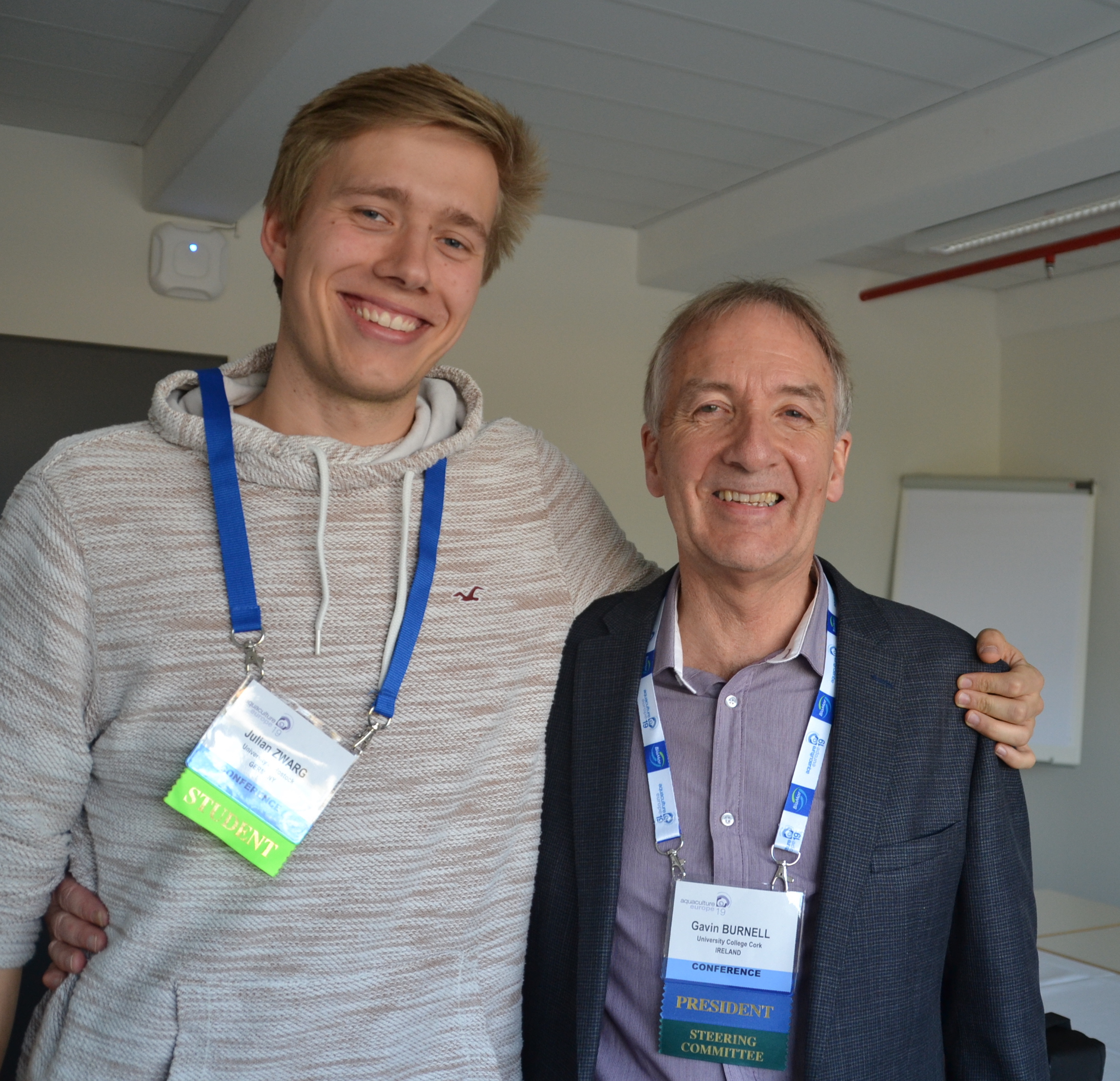
Gavin Burnell & Julian Zwarg
A warmly welcome to everyone,
my name is Julian Zwarg and I am currently studying Aquaculture at the University of Rostock. I am 24 years old and highly interested in the development and optimization of the food sector towards the goal of sustainability and climate neutrality. In my freetime I like to spend my time outside enjoying nature and sports together with friends and changing my perspective on every kind of things. When I read about the Adopt a student program of the EAS I was halfway through my masters course and really had the wish to expand my network in Aquaculture. So for me this was the perfect opportunity to go for.
I applied for the EAS mentorship program in October of 2018 as a mentee. Already after 2 months of the matching process I was asked to meet my potential mentor, Gavin Burnell.
After the pleasure of our first Skype we both agreed on the mentorship. We started this meeting by introducing each other. Therefore we talked about areas of interests, current problems and wishes for the future. We went on talking about the motivation why each of us participates on the program. For me as a mentee I hope to get some advice in career related questions (e.g. making important decisions and chosing which opportunities to take, especially regarding my thesis and a possible following PhD). The two of us want to expand our networks and surely the EAS Membership was a main driver to participate. Gavin furthermore wants to share his knowledge and help out newcomers. As he stated, he always looked for the contact to students during his career.
Furthermore we talked about Gavin’s scientific history and interests in the past as well as his actual plans and obligations and afterwards we exchanged some personal information. As his first move of kindness and support he offered me to have a look at my CV and give me some feedback on it. The timing for this could not have been better because I applied for a summer school at that time…
We decided on Skype at least once a month (more frequently if important things have to be discussed) and set our first physical meeting not later than at the EAS in Berlin, October 2019. In the following months we kept each other up to date by sharing personal as well as career related news to each other. Moreover Gavin is continuously giving me advice on my plans for my master thesis and shares valuable contacts as well as positive criticism with me.
For me, Gavin is although we have not met in person yet a very valuable contact. Not only is he giving advice regarding future career options. He inspires me and is helping me to figure out what I am really striving for in my career. By asking the right questions he empowers me to clarify personal goals and even if he may not know he is helping me to find my way through the fog of possibilities. He encourages me to expand my network and motivates me to stay focused.
I highly encourage all of you potential mentees as well as mentors to join this program. It allows both of you to stay up to date in recent and upcoming discussions, to share your knowledge and to change your perspective. For you potential mentees out there I hope the positive impact of this program could be shown by me! As I cannot speak for the involved and potential mentors, what I can say to you is that you can be an enormous help for us mentees. Your experience is priceless and therefore please participate even if you have doubts about your role, try it and I am sure you will profit more than you expect.
Regarding the fact that I applied to this program without any expectations you could truly say that I am overwhelmed by the positive impact of my participation! I am very thankful to have this opportunity and support by the EAS and by Gavin. Not mentioning which advantage the membership is providing to you. The access to scientific literature, the events and discounts you enjoy, this is a topic you could write another whole post about!
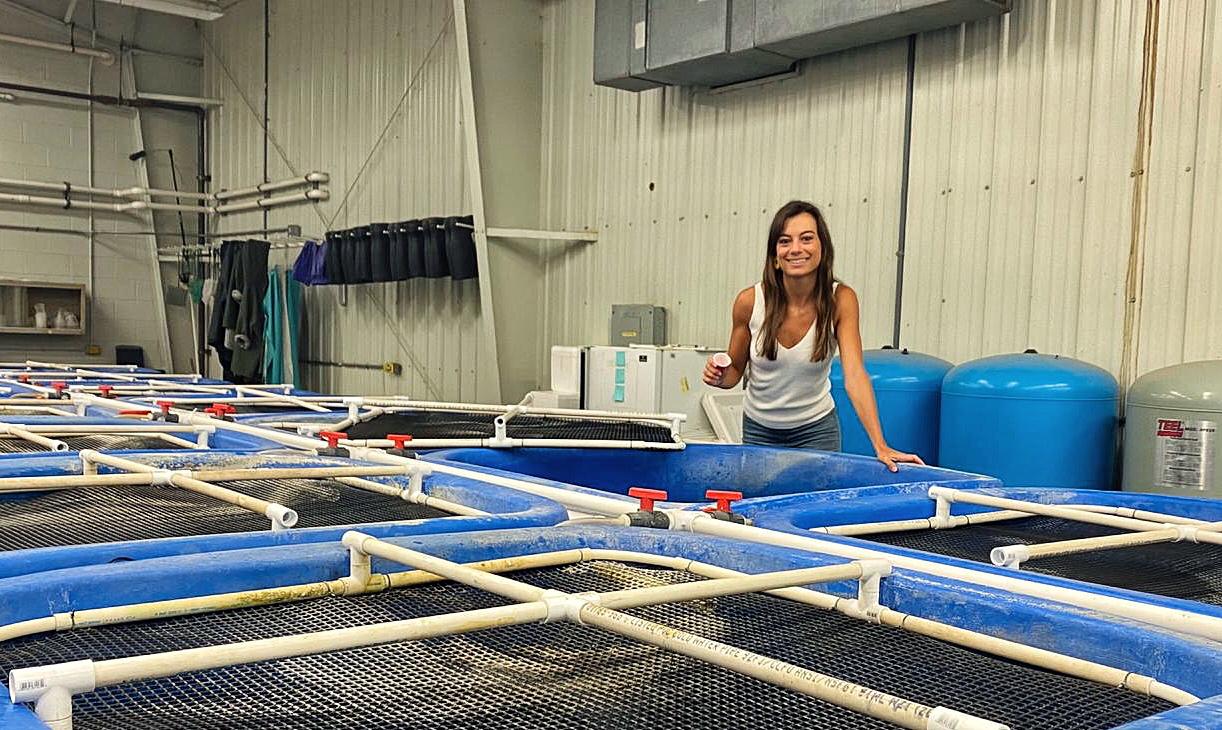
John Bostock & Marina Rubio
My name is Marina Rubio and I am from Madrid, Spain. I am a second year PhD student at the University of Idaho, specializing in fish nutrition and physiology. I am passionate about aquaculture, however, my interest in the industry or even marine or aquatic biology hadn’t always been there.
I studied biotechnology in Madrid for my bachelor’s degree, and after an internship I continued with my studies and started my Master in Aquaculture and Marine Resource Management at Wageningen University and Research in The Netherlands. At this stage, despite the big contrast with my previous background, one thing was clear: I wanted to become engaged in the aquaculture industry and contribute to sustainably produce protein for a growing population.
My interest in working with people from different cultural backgrounds brought me to Port Stephens Fisheries Institute in New South Wales, Australia, for my internship which I did in yellowtail kingfish and studied the influence of abiotic parameters on fish performance.
Back in Spain, I took part of a project oriented to improve aquaculture practices, with a big focus on policy and sustainability. Despite this was valuable experience for me, by this time I was reassured I wanted to become a fish nutrition expert, so following my instincts to travel the world, I started my PhD program in Idaho, USA.
There are many reasons that made me get involved in the “Adopt a student” program, but the main reason is that it is a great way to gain a unique perspective outside of academia and staying connected with the industry in Europe as well as being challenged to pursue unique opportunities to improve my management and communication skills. John is helping me get a clear picture of different career possibilities and how to work towards them.
On the other hand, I like having the opportunity to share what I am learning in America, as well as my project’s progress with a person outside university. Keeping contact with John, who is actively involved in the European aquaculture industry and has broad experience with students is an excellent way for me to have an outside opinion and keep focus of where I am headed to after I finish the program.
To date, we have had two meetings via zoom, and we agreed to continue to meet once a month by the same means. I am in charge of planning an agenda and sharing my progress. During our first meeting John shared a lot of his experience and his involvement in several projects, and even though his main area of expertise is not nutrition, that works great for me so I can think from different points of view and be more creative in my career.
It is in my plans for 2021 to attend one of the two Aquaculture Europe conferences, and this would make for a wonderful opportunity to meet John in person and expand networks.
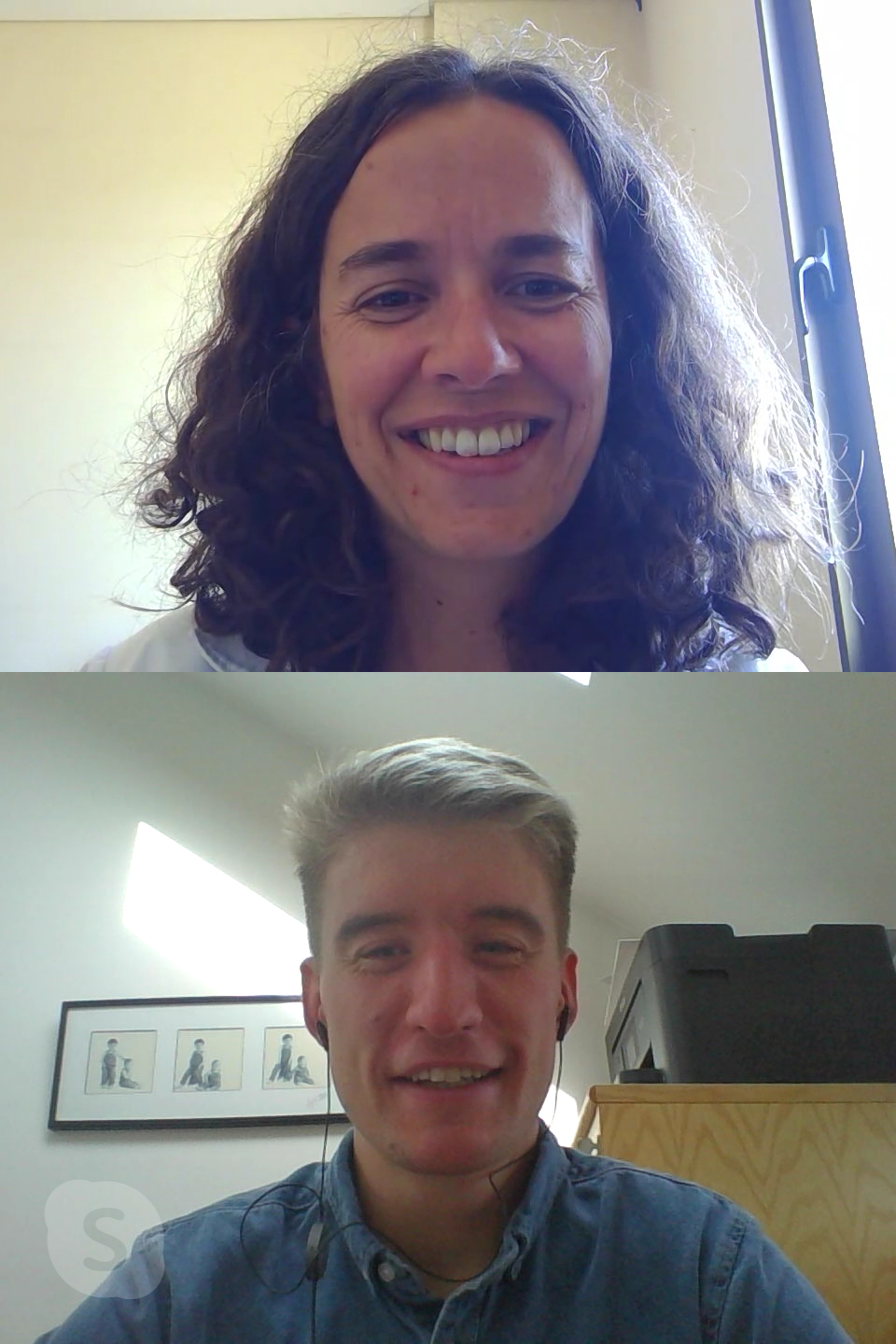 Ana Couto & Paul Mosnier
My name is Paul Mosnier and I am in the last semester of my master’s degree in Sustainable Aquaculture Systems at the University of Plymouth, UK. With extra time on my hands during the lockdown, I was spending a lot of time researching the industry and looking for career opportunities. I came across the EAS Adopt A Student Programme on LinkedIn and after reading about the experiences of previous mentees, I decided to apply. I hoped it would allow me to get a deeper insight into the industry and I was also looking for further help with my master’s dissertation. I was delighted to hear in April that Dr Ana Couto had agreed to be my mentor. Ana is an auxiliary researcher at CIIMAR (Interdisciplinary Centre of Marine and Environmental Research of the University of Porto) where she is a specialist in fish nutrition and immunobiology. We had our first meeting through Skype shortly after that and have continued with bi-weekly meetings.
I have really enjoyed the program so far and it has been great to build a relationship with someone of Ana’s expertise. We have discussed a variety of topics related to the aquaculture industry and it has been fascinating to learn about Ana and her team’s research at CIIMAR. Ana’s expertise in fish nutrition has been particularly helpful for my own dissertation which is looking at the effect of a feed additive on the early life stages of tilapia (Oreochromis niloticus). I have been learning a number of new concepts and analytical techniques and having the input of someone with such experience in this area has been invaluable. With her enthusiasm and ability to impart her knowledge, I was not surprised to learn that Ana is also Invited Auxiliary Professor at the University of Porto.
There are no strict rules for the program and participants can schedule to meet as often as they like. With no formal layout to the meetings, the program offers participants the chance to have informal conversations and share ideas in a relaxed atmosphere. Participation on the program also comes with the benefit of a membership subscription to the EAS for both mentor and mentee which gives participants access to more great resources. The EASTalk Webinars have been particularly interesting and the broad range of topics are testament to the huge potential of aquaculture.
I would highly recommend to other students to apply to the program and get involved with the great network that is the EAS. The input of experts like Ana is absolutely invaluable and the EAS is a great place to learn about the latest developments in the industry. For mentors, I think the program is a great opportunity to share research and network with young and prospective aquaculture professionals, and the informal approach means there is no pressure to spend time planning meetings. I am very thankful to Ana for sharing her knowledge with me and to the EAS for this great opportunity. I am looking forward to continuing my mentorship with Ana long into the future!
Shane A. Hunter & Pedro Lindenberg
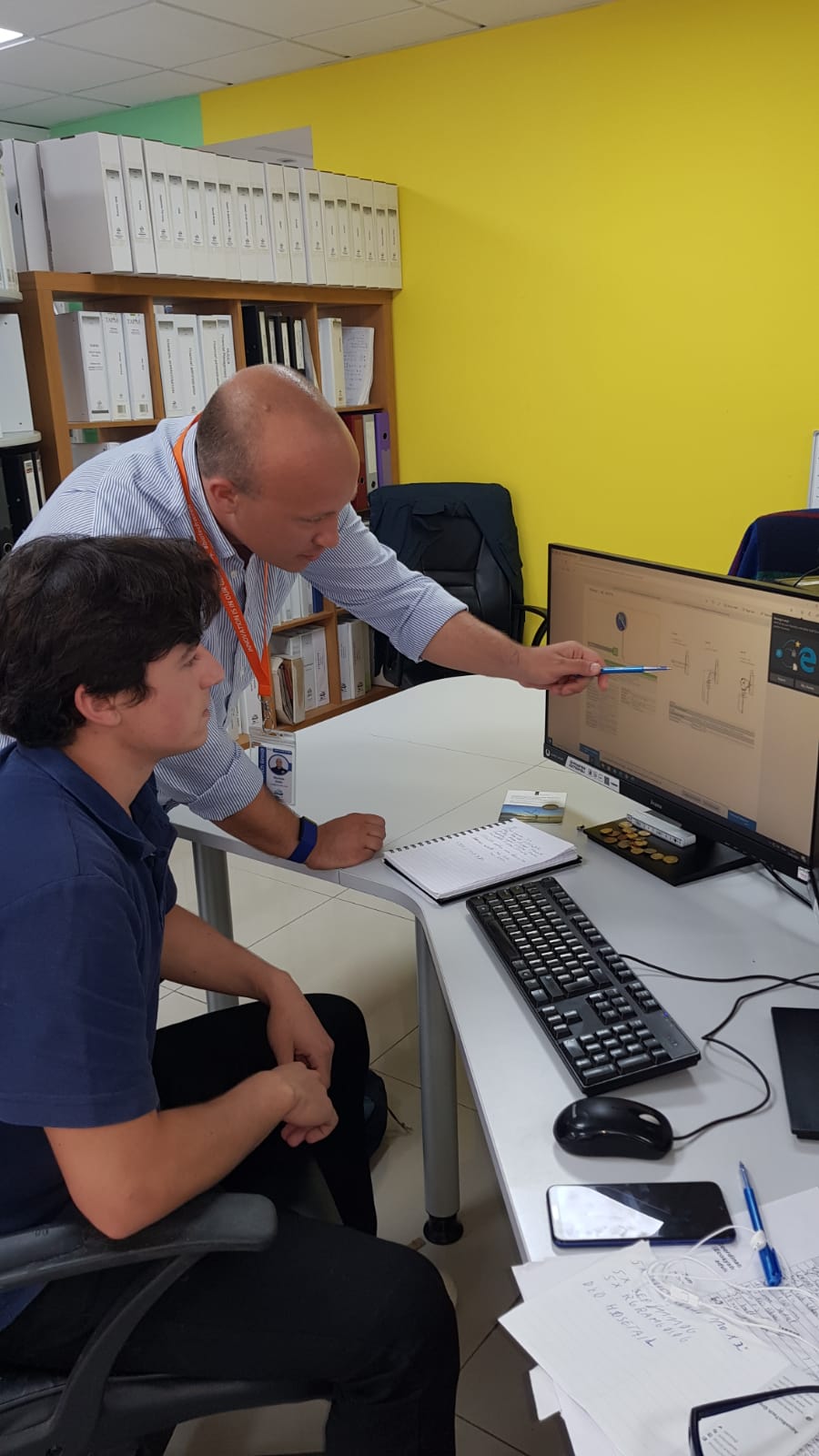
My name is Pedro, 23 years old, I am a student of Aquaculture Engineering at Universidade Federal de Santa Catarina, Brazil. My passion for Aquaculture started early, I had the privilege of growing up working in this area with the family’s business. Upon entering college I started to realize the dimension and technical beauty behind the animal protein production that grows at the highest rates in the world. Inside it, a culture technology started to catch my attention, RAS (Recirculation Aquaculture Systems).
The rise of this technology and it use in the aquaculture industry is due to several factors, among them the need to create the farming environment itself, not to be at the mercy of natural issues over which we have no control, such as, the warming of the oceans, pollution or water scarcity, and temperature. As the water is continually reused, we achieve water efficiency far superior to conventional systems, increasing productivity, biosafety and control throughout the production stage.
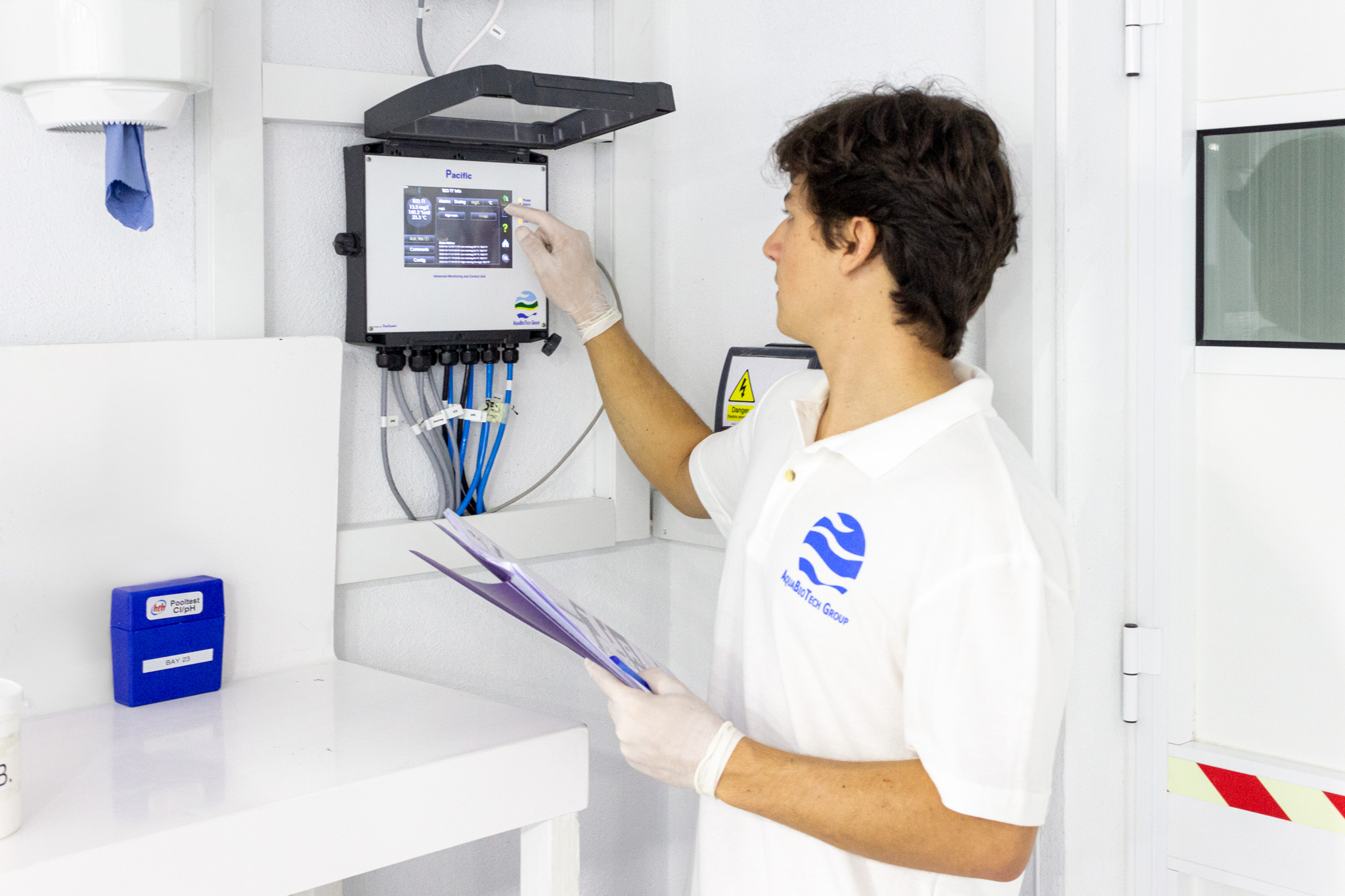
However, in Brazil there are still no commercial scale farms or well-structured projects that use technology in production. I decided that I was willing to search for something outside, that was when I found the Student Group. I got in touch looking for a mentor for an internship. After a few months I received the great news that AquaBioTech Group had accepted to be my mentor. Based in Malta, the company has years of experience operating and scaling projects that use RAS technology around the world.
Here in Malta I had the opportunity to collaborate with a complete team of professionals from different areas. At the start of my time here, I worked with the installation team, whose focus was to upgrade the RAS used for Research and Development. After that, I worked with the technicians who operate and maintain all systems. The company has 30 individual RAS Bays for various trials (equipment development, nutritional, vaccines, etc) for both freshwater and seawater. In parallel, I dedicated myself to scaling equipment and hydraulic calculations, themes that fascinate me. For this, I 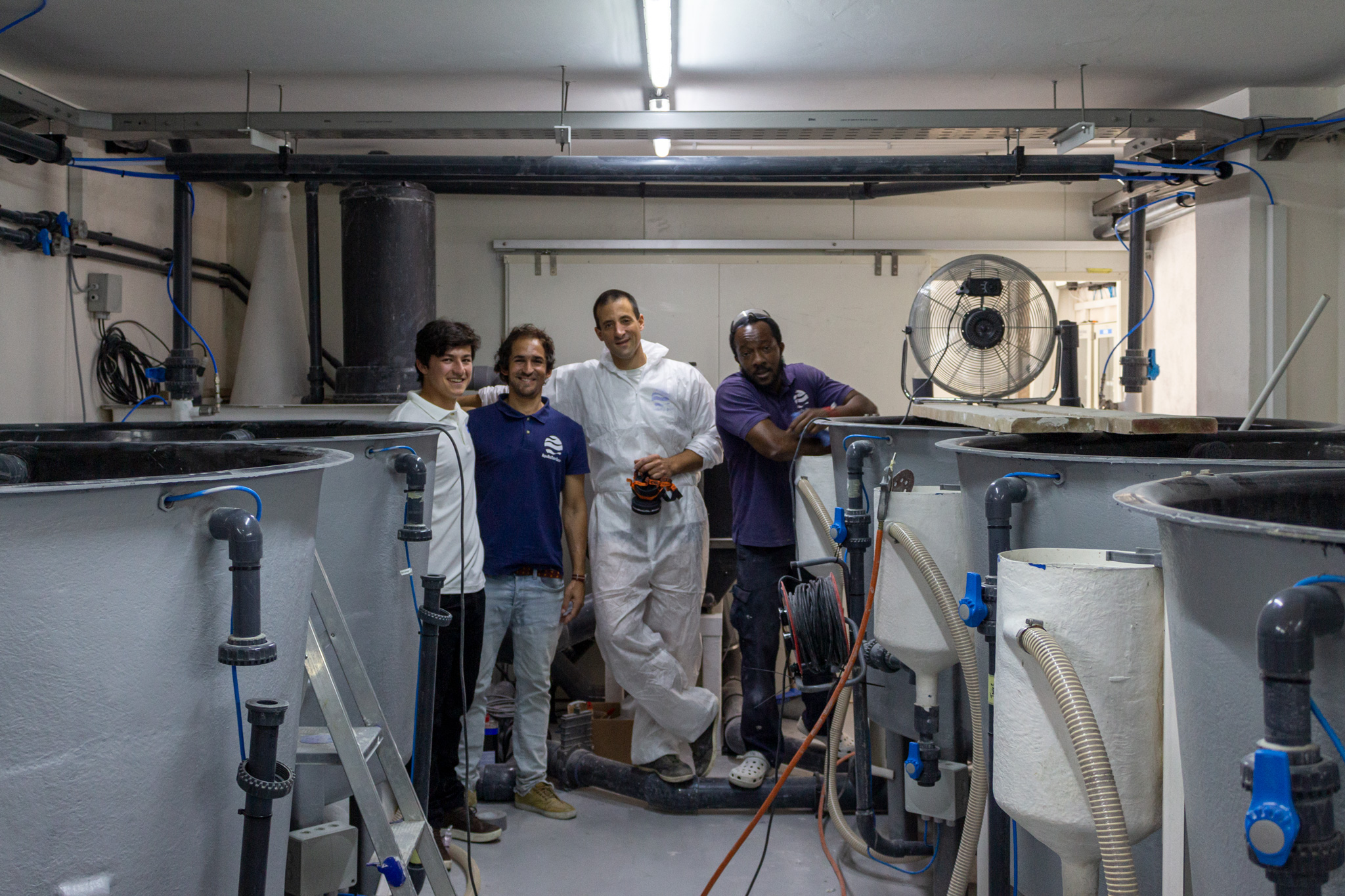 had the support of the engineering and design team.
In my view, RAS technology is a large topic with much to learn about its components and applications, such as impact on yield, all the pollution generated, how to treat this effluent, and how to promote the best welfare of the fish. If this is not done well, the quality levels required for your animals to grow well and healthy will not be reached. It is a real puzzle. But when you start to the figure out the engineering behind it, it’s amazing.
There are still several challenges ahead. As it is a recent technology, the advances do not stop. My mentoring was especially important to better understand all the issues surrounding the topic. In addition to great professional growth, having the opportunity to experience the culture of another country and being able to work with people from all over the world was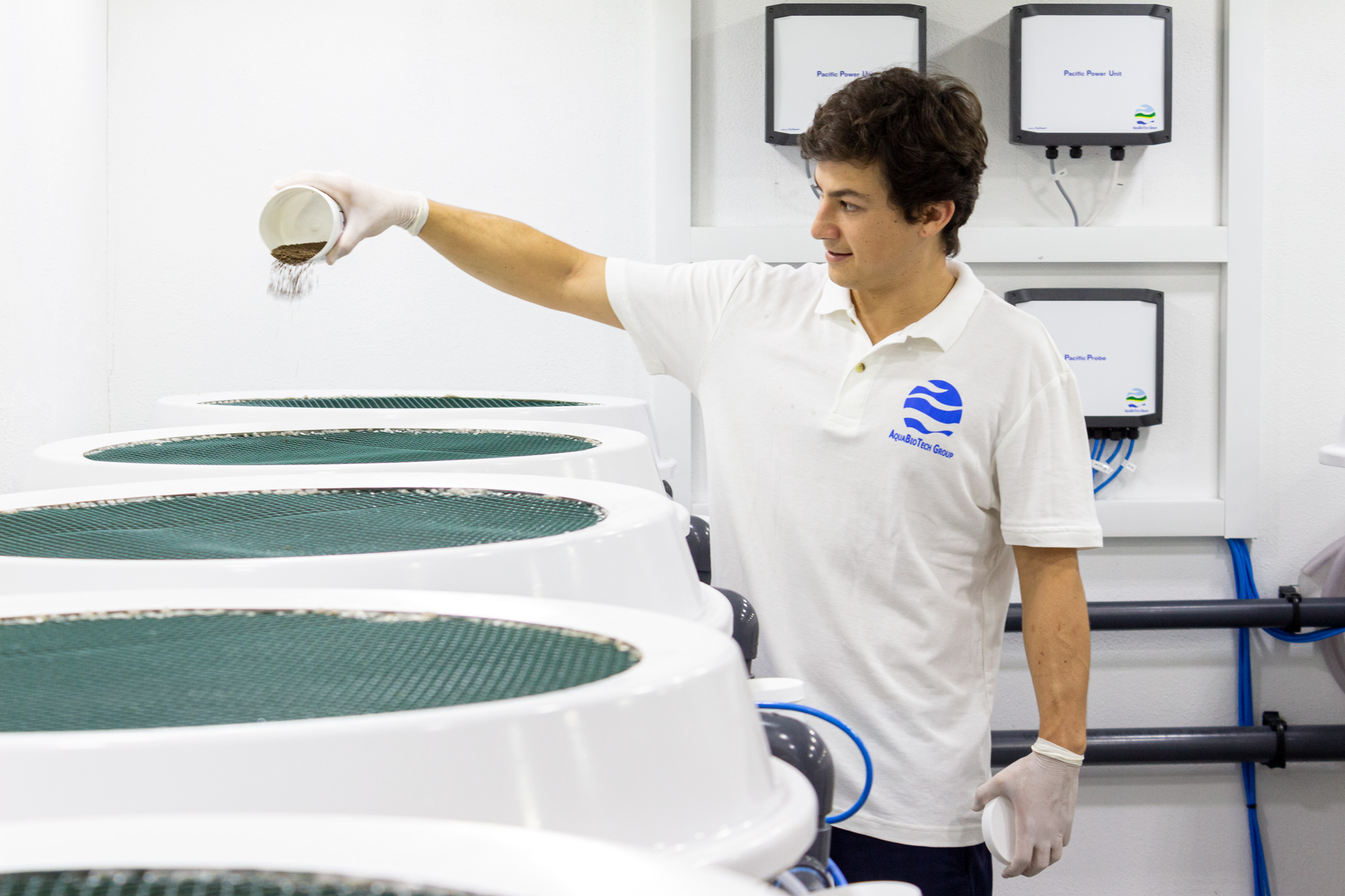 incredible. I am grateful for the patience and willingness of everyone, who answered my unceasing questions.
I advise students to try to seek new experiences, look for internships and mentors, see with your own eyes the problems of the field. The Student Group was the key to this connection.
Sachi Kaushik & Anil Tellbüscher
„Teenager 'blind' from living off crisps and chips“, headlined BBC News on September 3rd, 2019. Nowadays, this incident is obviously - or perhaps hopefully - a remarkably drastical but exceptional case of malnutrition. The basic nutritional requirements of humans are generally well studied since many years. Topics like the long-term effects of vegetarian and vegan diets for mankind are shaping the debate at the moment, but what about fish?
My name is Anil Tellbüscher and I am a 28 years old student in the last period of my master in „Fish Biology, Fisheries and Aquaculture“ at Humboldt-University Berlin, Germany. Before, I obtained a bachelor degree in „Water Science“ at University of Duisburg-Essen, Germany.
Fish nutrition is an exciting field of research for me as it determines the outcome of aquaculture in many ways. At the biological level, there are manyfold interdependencies with respect to growth and health of fish and, furthermore, also to reproductive success and the quality and survival of the offspring. Seen from a more general viewpoint, the availability of suitable feed determines the profit and also the sustainability of aquaculture. It fascinates me that, simply speaking, all these variables can be manipulated by mixing the right ingredients together and pelleting or extruding them.
However, a challenge that certainly many students are facing is to get a broad overview about the immense amount of activities and information. What are the current topics of interest? What was already done? Where are science and industry heading to? Who is doing what and where?
Finding answers to this kind of questions and putting them in the right context without getting stuck into details can be very time consuming.
After a while of dealing with a topic, confusion gives way to understanding, often accompanied by own ideas. To further develop them, having the opportunity to discuss them with someone who can give profound feedback proves itself very valuable.
Finally, the best idea is worthless if the right partners are missing to translate it into action, but as a newcomer within an established professional environment, the amount of people in the own network is limited.
All these possible obstacles on the career path of a student led me to the decision to apply for a mentoring programme.
Thanks to the Adopt-a-student programme of the EAS student group, I am now mentored by Mr. Sachi Kaushik, a well-known expert in the field of fish nutrition with many years of experience.
Sachi and I had a first Skype meeting and have occasional contact via E-Mail. He provided me a lot of international contacts for possible internships, helped me a lot with my literature research, and gives me great feedback to my questions.
We agreed in a mentoring at least until the end of my master. I am looking forward to meet him in person this year!
Sunny Z. Akhter & Anneliese Beckendorff
Annelise's feedback:
My name is Annelise and I am 29 years old. I have had my bacholars in Biology and I have just wrote my master thesis for master program in science, fisheries and aquaculture from Germany. I joined the EAS mentorship program while I was writing my master thesis. I was looking for someone with experience in aquaculture who can help me to understand the world of aquaclture from another perspective. I worked in my master thesis on fish feed ingredient e.g. insects with different species of fish.
EAS connected me with Sunny Z. Akhter who is an aquaculture expert based in Norway. When I had first telephone meeting with him, he told me that fish feed ingredients are this one of the expertise, he discussed with with me at length that what are the different challenges to be solved in the space of fish feed ingredients. He also cleared my vision on what should I be doing moving forward in my career. As everyone, who graduates in science it is a dilemma that what to do next? go for a job or find a PHD. Sunny told me it is very important to have hands on experience which can help me to make real impact. Phd is good but I should not force myself to do it. Moreover, he adviced me that aquaculture is the feild with full of commercial opportunites, so it is important to build this focus early on.
Since, the start of the mentor program, we are speaking with each other to share the experience and insights of aquaculture. On average, we have spoke 1-2 times in a month with each other. As I have recently got a job as Hatchery assisstant in Switzerland, although I am still student but I am going to be getting my degree soon. Here in hatchery, we are working with Recirculating aquaculture systems. In my recent conversation with Sunny, I discussed about what are the challanges we are having in the RAS aquaculture. As Sunny, as worked with Land based fish farming, his experience came handy in advising me on different related issues. I look forward to keep this collaboration and I hope we meet once the Covid-19 restrictions go away.
 Sunny's feedback:
My name is Sunny and I am working in aquaculture indrustry for almost a decade. I am based in Norway and my expertise are fish nutrition, fish farming and businesses related to that. My mission is to bring aquaculture to next level and I belive it is important to transfer the knowledge to those who are students or fresh graduates and are just entering their working life in aquaculture. Most importnatly, I think there needs to be mindset shift in the upcoming talent in the indrustry. Aquaculture indrustry is an exciting indrustry to be in and like any other indrustry it has it challanges. It is important for the new comers to be aware of this early on and they should put their energy in grasping not just the knowledge but also problem solving mindset.
Problem solving mindset in aquaculture is only possible when you understand or try to understand the big picture of aquaculture. It is very important that the students and fresh graduate understand that they have to develop the skills early on in their careers that they should not restrict themselves in only one discipline in aquaculture but infact they should explore more and combine the knowledge from different disciplines for problem solving.
For example, if you are working on fish nutrition, you should also look into the efforts which goes in the farming and try to combine the understanding of both farming practices and fish nutrition aspects. Moreover, the students should not limit themselves to one species in aquaculture, they should rather diversify their experience as much as they can.
The success in any particular aquaculture venture depends a lot of the people collaborating with openness and passion. It is important to not lose the sight of this aspect and everyone coming in this feild shoud cultivate people skills early on in their careers.
I am currently mentoring two students and I hope more people from the indrustry will join this netowork to create impact on sustainable aquaculture entering fresh graduates and students early on, so together we can buid a great future for aquaculture.